This article was first published in the magazine at activewearusa.com


Recently I have added sprint training to my workout
regimen. I am strongly attracted to the
dynamic, all-out bursts of energy followed by short periods of rest. Sprinting
requires careful warm-up to help prevent injury, and the following is my
favorite sequence of yoga postures to warm up for running.
Supine Big Toe Balance with PNF technique (Supta
Padangusthasana)
PNF (Proprioceptive Neuromuscular Facilitation) technique
helps to release the hamstrings by first engaging them, then relaxing into the
stretch. Be gentle with this, do not
force any stretch, as we are using this as a warmup.
To get into the
posture: Lie on your back with both feet on the floor and knees in the air.
Extend your right leg straight up from the hip, and loop a yoga strap around
the ball of your right foot. Then, extend your left leg straight forward from
the hip and press it down into the floor while keeping the right leg in place.


To add the PNF, press the right leg in a forward direction,
like you are trying to bring the leg down to the floor, but resist with the
strap so your leg doesn’t actually move toward the floor. Hold the press for 5-10 seconds, then release
the press and gently draw the leg closer to your torso to increase the stretch
and hold for 3-5 deep breaths. Do this
three times.


After the PNF, bring the right directly on top of the hip,
then move the leg to your right about 12 inches; if the leg were a clock, you
would be moving toward 1 o’clock. Then
draw the leg into the stretch again, this time targeting the inner part of the
hamstring, and hold for 3-5 deep breaths.

Bring the right leg back to center, then toward the inside
so it hovers above your left hip bone, or 11 o’clock. Draw the leg into the stretch again,
releasing the outer hamstring and possibly the IT band. Hold for 3-5 deep breaths.

Repeat the sequence on the left leg.
Bound Angle Pose (Baddka Konasana)
A nice release for the groins, this stretch is especially
good if you tend to run with knees turned in or run mostly on the inside arches
of your feet.
To get into the
posture: Sit on the floor, or on a blanket(s) if your hips or groins are
tight. Bring the soles of your feet together as close to your pelvis as you can
get comfortably. Gently engage the outer
hip muscles to press the knees down toward the floor. If you are already feeling a deep stretch,
stay upright. If you would like more,
fold forward toward the floor, making sure the fold starts from the hip
creases, rather than rounding the back. You can rest your head on a yoga block. Hold for 5-10 deep breaths.


“Choose Your Own Adventure” postures J
The next two postures can help counteract habits of turning
in or turning out while running. If you
tend to “duck footed” or roll to the outsides of your feet, try Virasana to
encourage more internal rotation of your thighbones. If you tend to run “knock kneed” or roll in
toward the arches of your feet, try Ankle to Knee to encourage external
rotation of the thighbones. Or do both
postures, but spend more time in the one that counteracts your natural
tendency.
Ankle to knee (Agnistambhasana)
This posture stretches deep muscles of the hips and
encourages external rotation of the thighbones.
To get into the
posture: sit on the floor, and bring your left shin parallel to the short
edge of your mat, then stack the right shin on top of it, placing the right
heel at the outside edge of your left knee.
If your hips resist this position, try sitting on a blanket or
block. If your left knee is off the
floor, be sure to support it with a blanket or block. If you are feeling a deep stretch staying
upright, stay upright. If you would like
more of a stretch, fold forward toward the floor, making sure to fold from the
hip creases rather than the low back.
There should be no pain or discomfort in the knees; if you feel pain in
the knees, try just doing one leg at a time as pictured below. Stay for 5-10 deep breaths, then repeat with
the left leg on top.


Hero’s Pose (Virasana)
This posture encourages internal rotation of the thighbones,
and it also stretches the quadriceps, knees and ankles.
To get into the posture:
From hands and knees, bring your knees together and your feet just wide enough
apart that you can sit between them. If
you are not able to sit all the way down on the floor, sit on a blanket or
block. Make sure the feet point straight
behind you and the foot is in the same line as the shin, rather than feet
pointing out to the sides. There should
be no pain in the knees or ankles; sit on more props (i.e. two blocks) to
release pain in the knees, and place a rolled up towel under your ankles to relieve
strain in the ankles. Stay for 5-10 deep
breaths.


Dancer Modification (Natarajasana)
Stretching the quadriceps before running can help keep the
knees safe as you run.
To get into the
posture: Stand with your feet hipbone width apart. Bend your right knee,
bringing the heel toward your bum, and grab the foot with your right hand or
both hands to pull it close to your bum, which keeping your low back long
rather than arched. Keep your right knee
in line with your left, and imagine lengthening the right thighbone straight
down toward the floor. Hold for 5-10
deep breaths, then repeat with the left leg.

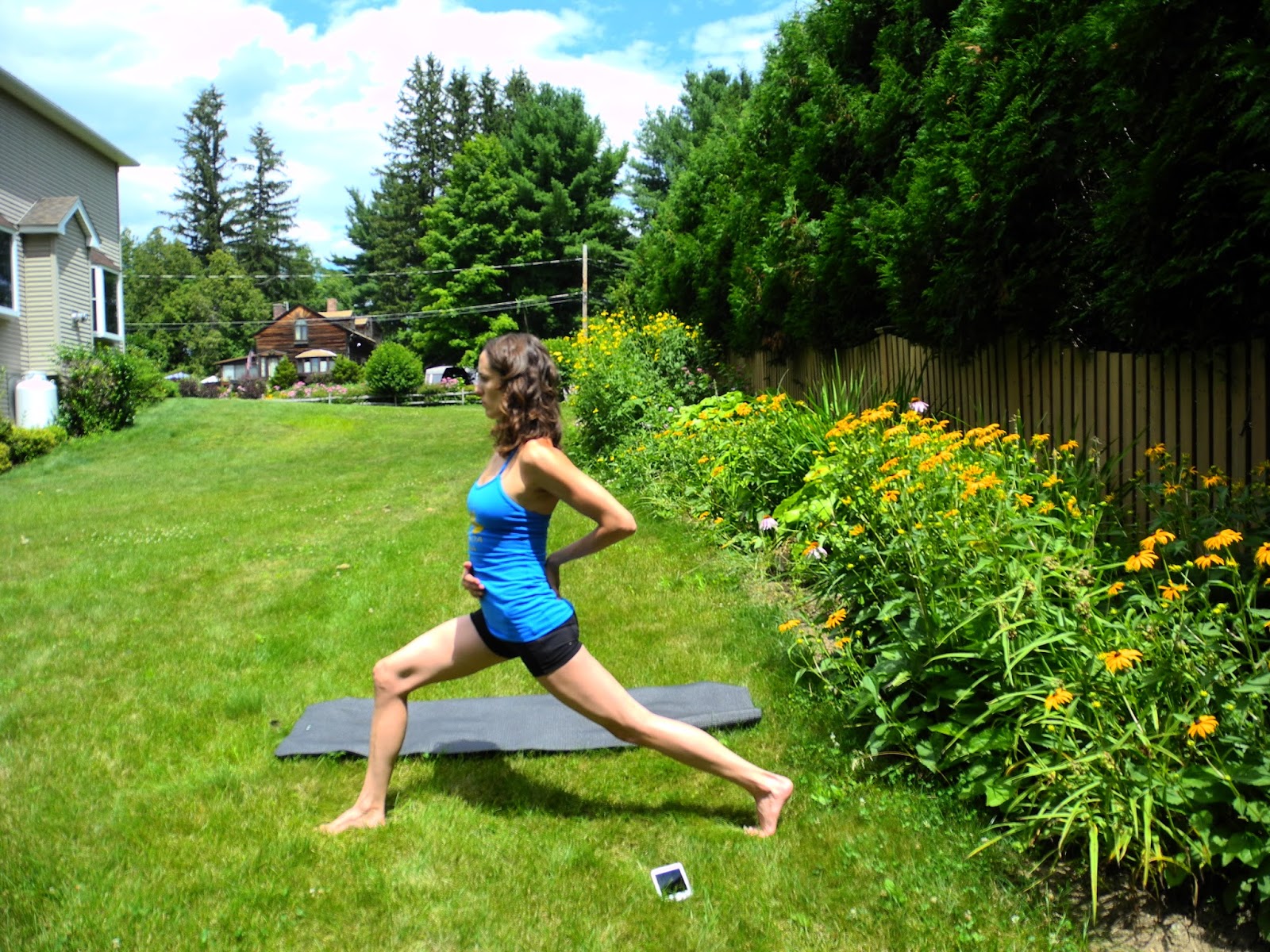
Crescent Lunge (Anjaneyasana)
Running can create tightness in the hip flexors, and this
posture helps release the hip flexors and lengthen your stride.
To get into the
posture: stand with your feet hipbone width apart. Step your left foot back
to a lunge position; this can be a shallow or deep lunge depending on your hip
flexibility. Make sure your right knee stays directly on top of your right
ankle, and try to stack the left heel on top of the ball of the foot. Draw your belly button in and up to support
the low back, and lengthen your tailbone down toward the floor. On an inhale, raise your arms to the sky, and
take 5-10 deep breaths into the lengthening sensation in the front of your left
hip, then repeat with the left leg forward.

Happy running! J